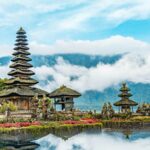
“The future of tourism promises more than just protecting the places we visit — it’s about healing, revitalizing, and growing together with local life.”
Beyond Sustainability: The Era of Restoration Begins
In the tourism sector, the long-standing emphasis on “sustainability” is giving way to a more ambitious concept: regenerative tourism.
This new approach moves beyond the passive goal of “causing no harm” to actively restoring and improving natural and cultural ecosystems. Visiting a destination is no longer about “leaving no trace,” but about “leaving a positive impact.”
“The new generation of travelers doesn’t just want to touch nature — they want to build a shared future with it.”
This shift requires a rethinking of local communities, agricultural lands, cultural heritage, and carbon balance within the global tourism economy.
Institutions like the WTTC and Red Sea Global predict that the “regenerative” model will become a new investment standard by 2030.
According to the 2025 WTTC Report, the global tourism economy has reached USD 9.9 trillion, accounting for 9.1% of the world’s GDP. A significant portion of this growth is driven by nature-based and community-centered investments.
Destinations Redefined
New-generation travelers are transforming the direction of the industry.
Examples include: wastewater recycling in hotel gardens on Mallorca Island (Spain), forest therapy tours in Japan’s Nagano region that generate carbon credits, and safari experiences in Kenya developed in partnership with women’s cooperatives.
According to Mastercard Economics Institute, nature-based tourism investments increased by 28% in 2025 compared to the previous year.
In this new paradigm, the definition of luxury is also evolving.
Five-star hotels are being replaced by nature-based experience centers and carbon-neutral lodges. Major global hotel chains are going beyond “net-zero” goals to publish measurable biodiversity impact reports.
“Regenerative tourism is no longer about visiting a place — it’s about collaborating with it.”


A New Era for Investors
In tourism investments, regenerative impact has become a mark of prestige. The 28% annual growth in nature-based projects shows that investors now seek not only financial returns but also ecological gains.
Many countries have launched tax incentives and grant programs to support this shift.
For instance, New Zealand’s Restorative Tourism Fund offers grants to small businesses for ecosystem rehabilitation and cultural heritage preservation. Similarly, Norway has integrated community tourism models into its national tourism strategy to revitalize traditional fishing villages.
In Türkiye, the Ministry of Culture and Tourism’s 2024–2030 Strategic Plan defines pilot projects for regenerative tourism under its sustainability agenda. In regions such as Antalya, Muğla, and Cappadocia, carbon-neutral facilities and partnerships with local producer cooperatives are being developed.
“Every new facility is evolving from consuming its surroundings to coexisting with its ecosystem.”
Core Pillars of the Regenerative Model
Experts highlight three strategic pillars of regenerative tourism:
Ecological Restoration: A share of tourism revenue is allocated to environmental recovery projects. According to WTTC, as of 2025, 34% of global hotel chains contribute annually to restoration funds.
Community Engagement: Local residents become direct stakeholders in operations, guiding, gastronomy, and cultural experiences. In Türkiye, as of 2023, the tourism industry employed 3.2 million people, meaning one in every ten jobs nationwide.
Economic Balance: A greater share of tourism income is reinvested into local economies. In 2023, Türkiye’s tourism sector contributed TRY 3.11 trillion to GDP — about 12% of the national economy.
“Regenerative tourism not only safeguards local well-being — it also deepens the traveler’s sense of moral fulfillment.”
The New Story of Travel
By 2025, the travel industry is redefining what it means “to journey.” Regenerative tourism represents a global paradigm shift that is ethical, economic, and ecological.
The traveler is no longer a mere guest, but a partner in local prosperity. Every flight, every stay, every meal — is increasingly viewed as an investment in nature, community, and the future.
According to UN Tourism, by the end of 2025, 1.4 billion international trips are expected worldwide, with about 20% taking place on measurable regenerative routes that assess environmental and cultural impact.
Türkiye is also aligning with this trend: pilot projects focusing on “tourism that restores local life” are being developed in Cappadocia, Datça, and Ayvalık, with official implementation expected to expand by 2026.